Running Creators in Japan, Now Looking at Korea: What Actually Changes
The most common version of an inbound message we get is some form of this. We ran creators in Japan, it worked, Korea is next, how different is it really.
The honest answer is that the strategy transfers and the execution does not. If you hand your Japanese brief to a Korean agency and ask them to translate it, you will get a campaign that looks right and converts badly. Here is what actually changes, and what you can keep.
Both markets are worth doing, for different reasons
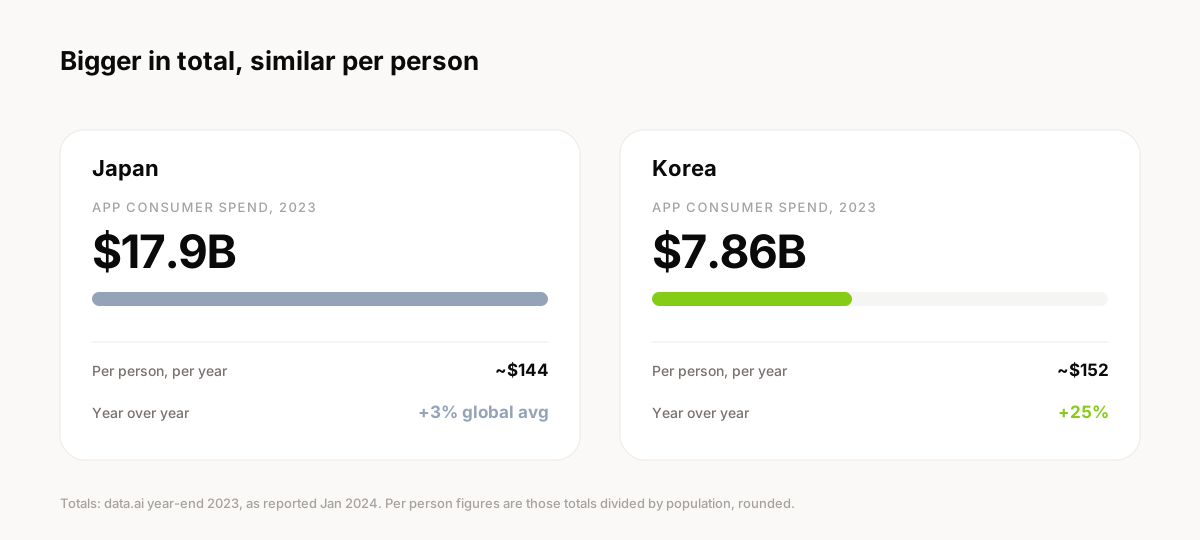
Japan is the bigger market. In 2023, consumer spending in Japanese mobile apps was $17.9 billion, third globally. Korea was $7.86 billion, fourth. Those figures come from data.ai's year-end report.
Per person the two are much closer than the totals suggest. Divide by population and both land somewhere around $145 to $150 a year. Korea also grew the fastest of any top ten market that year, up 25%.
So the read is not that one market is rich and the other is not. It is that Japan gives you more total volume and Korea gives you a smaller pool of people who spend at a similar rate and adopt faster.
For AI products specifically, that adoption gap is worth a second look. As of February 2026, 86.8% of Korean smartphone users, about 44.47 million people, had at least one generative AI app installed. Active use was 48.7%, up 26.4 points in a year, and average time per user reached 2 hours 15 minutes a month, up 41%. Those numbers are from WiseApp Retail, reported by the Seoul Economic Daily in March 2026.
A country where nearly nine in ten phone users already have an AI app installed is not a market you have to educate. It is a market where your category is already crowded and the question is whether anyone has heard of you specifically.
Two more numbers that tend to land with founders building AI products.
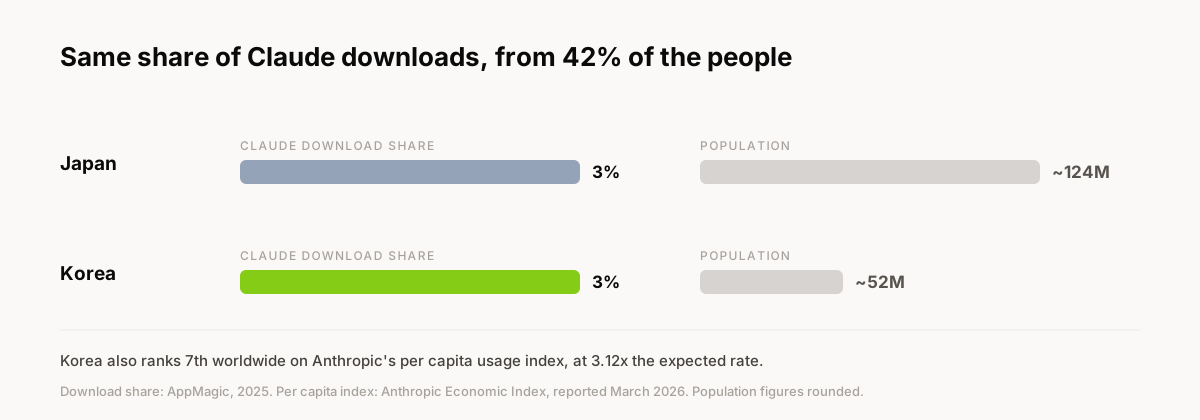
Claude's download share by country in 2025, per AppMagic, put Japan at 3% and Korea at 3%. Equal share, from a country with roughly 42% of Japan's population. Per person that is a meaningfully higher rate of people reaching for the same tool.
And on Anthropic's own per capita usage index, reported in March 2026, Korea ranked 7th in the world at 3.12 times the expected rate, ahead of every other Asian market except Singapore.
None of this means Korea is an easier market than Japan. It means the people are already there, already paying for tools in your category, and already deciding between options. That is a positioning problem, not an awareness problem, and creators are a positioning instrument.
What transfers from your Japan program
More than people expect.
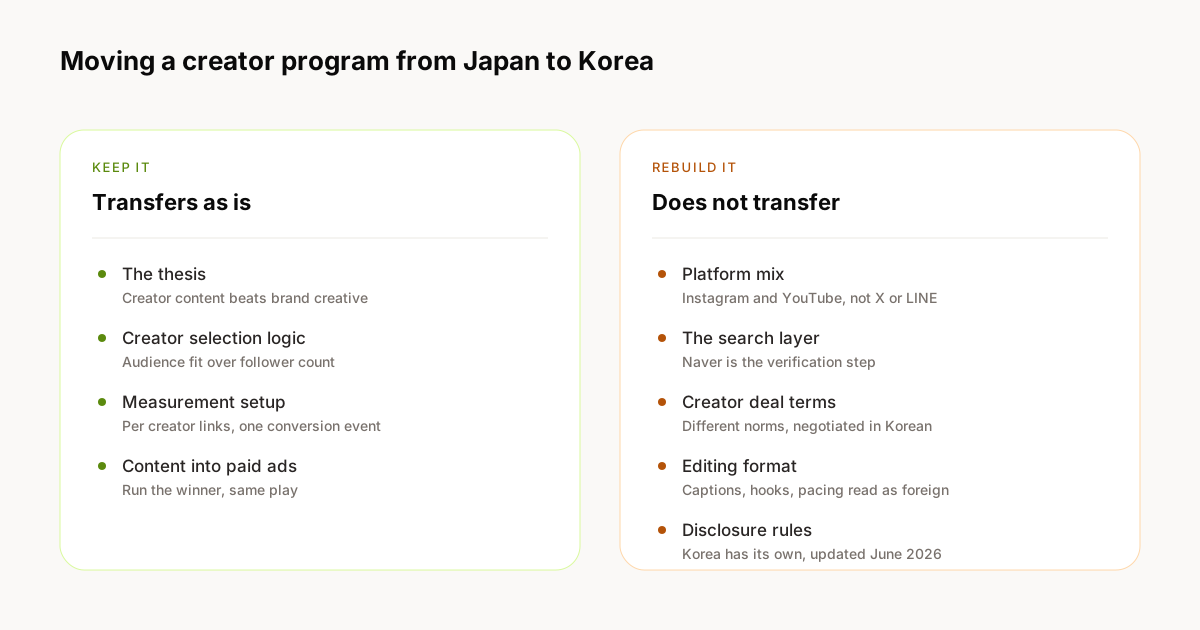
The thesis transfers. If creator content outperformed your brand creative in Japan, it will outperform it in Korea too, for the same reason. Someone the audience already trusts is doing the recommending.
The selection logic transfers. Whatever you learned about picking creators by audience fit rather than follower count applies without modification.
The measurement setup transfers. Per creator links, a conversion event agreed before filming, reporting against that event rather than views. If you built that discipline for Japan, keep every piece of it.
The content-to-ads motion transfers. Taking the creator video that performed and running it as a paid ad is the same play in both markets.
What does not transfer
**The platform mix.** Korea runs on Instagram and YouTube, with TikTok in a supporting role. X and LINE, which carry real weight in Japan, do not have the same position in Korea. If your Japanese program leaned on either one, that part of the plan has no Korean equivalent.
**The search layer.** This is the difference people underestimate most. In Korea, someone who sees a creator post and gets interested does not go to Google. They go to Naver and search your brand name to see whether real people have written about you. If nothing comes up, a share of that interest dies right there. Your Japanese program had no equivalent step, so nobody built for it.
**The creator deal.** Korean creator negotiations have their own norms around fees, revision rounds, usage rights, and how boost rights are agreed. A term sheet that worked in Japanese will need to be rebuilt in Korean, and the negotiation happens in Korean.
**The editing format.** Caption styling, hook pacing, how much text sits on screen, the narration rhythm. These conventions differ between the two countries and they shift year to year inside each one. A Korean viewer reads a Japanese-format edit as foreign in the first two seconds, the same way the reverse happens.
**The disclosure rules.** Korea has its own requirements, and they changed again on June 1, 2026 when the Fair Trade Commission added AI generated virtual endorsers as a category that must be labeled. Whatever compliance setup you built for Japan does not carry over. We wrote up the Korean side separately.
The Naver step, in practice
If you take one operational thing from this, take this one.
Plan for brand search before the creator posts go live. In Korea the sequence is usually discovery on Instagram or YouTube, then a verification search on Naver, then the decision. Content on the social side without anything on the search side means you are paying for the first step and losing people at the second.
You do not need a full Naver program on day one. You need something to exist when your name is searched. Blog content, a brand page, creator posts that get picked up. Enough that the search returns something other than nothing.
This is also a useful measurement tool. Naver Data Lab publishes search trend data for free, so a rise in brand search volume during a campaign is a proxy you can watch even when Meta cannot attribute a conversion that closed on a Korean platform.
How I would sequence it
Keep your Japanese measurement framework and your creator selection logic. Those were expensive to build and they still work.
Rebuild the creative brief from scratch with Korean creators, not with a translator. The format is the part that has to be native.
Get something on Naver before the posts go live, even if it is small.
Start with fewer creators than your Japan program used. Korea is a smaller pool of people spending at a similar rate, so the right five will tell you more than a wide test will.
Run the winner as a paid ad. Same play as Japan.
Where OpenLime fits
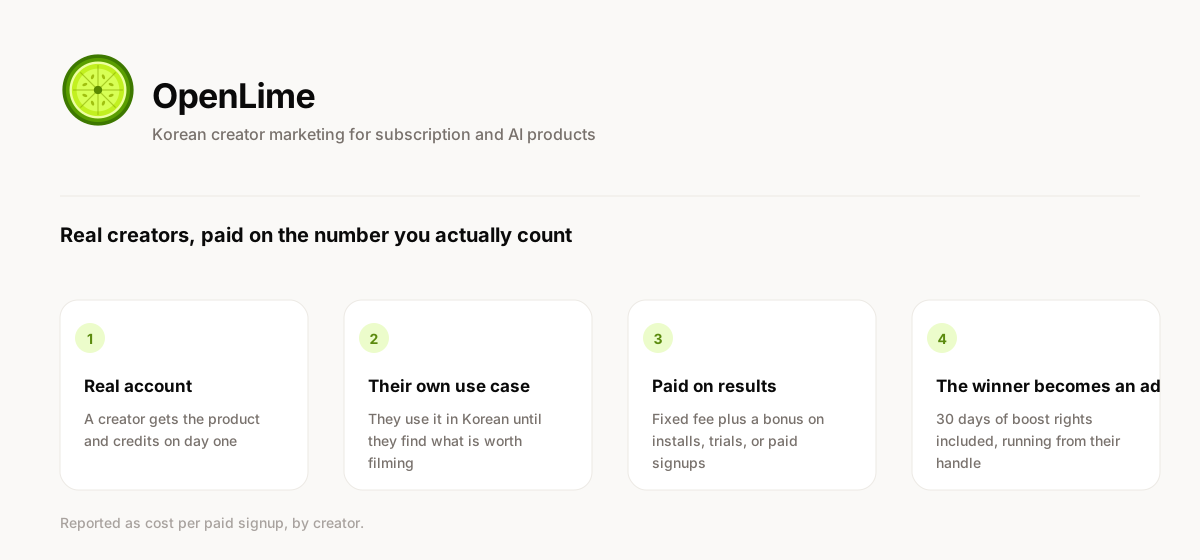
OpenLime runs the Korean side for products that already have traction somewhere else. Subscription and AI products where someone has to see the thing work before they pay.
We source and negotiate in Korean, brief creators to use the product for real and find their own use case, and report results as paid signups per creator. Every creator contract includes 30 days of boost rights, so the video that converted runs as a Meta ad the same week. If your funnel needs the search layer, we can add Naver alongside the creator work.
We do not run Japan. If you are looking for one vendor across both markets, we are not that. What we are is the team that will not hand you a translated version of your Japanese campaign and call it a Korea strategy.