Curation Pages vs Creators in Korea: Which One Gets You Paying Users (2026)
There are two ways to buy Korean attention for a software product right now, and they get mixed up constantly.
One is a curation page. The other is a creator. Both are on Instagram, both put your product in front of a lot of Koreans, and both come back with a report full of views. If what you sell is a subscription, the difference shows up at the paid step, and it is big.
Here is how I think about the two when a founder asks, and where each one tends to earn its money.
What a curation page is
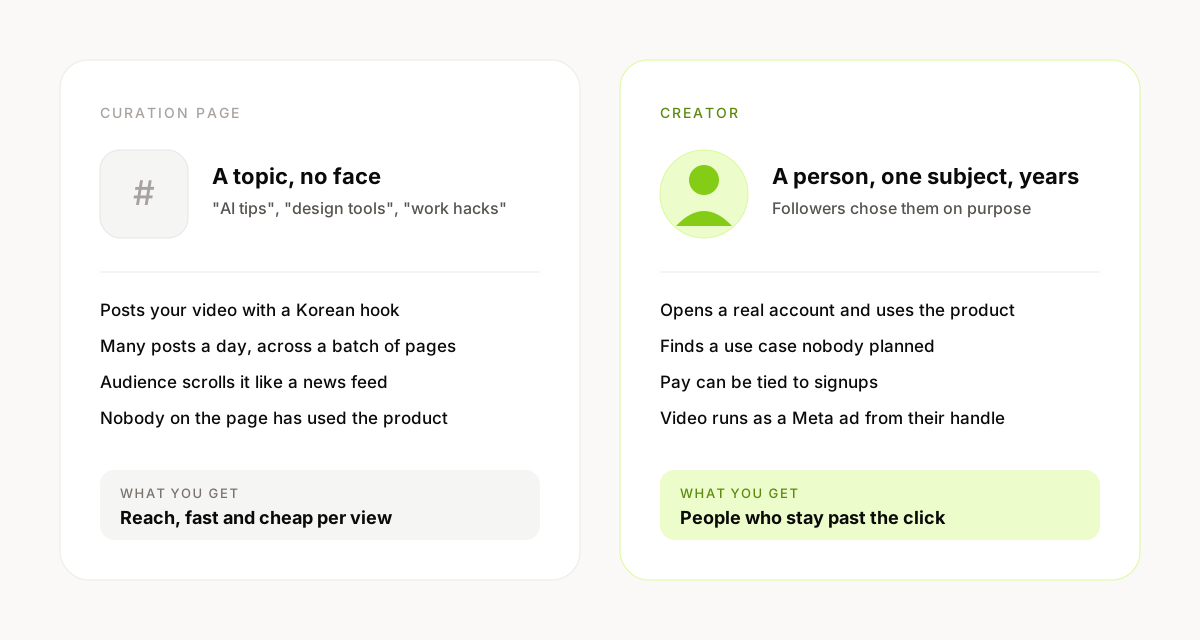
A curation page is a themed account with no face on it. "AI tips," "design tools," "productivity for office workers," that kind of thing. Some have a few hundred thousand followers. They post many times a day, and a lot of what they post is collected from elsewhere and recaptioned in Korean.
Brands pay to be in that feed. Usually your own video gets a Korean hook and goes out on a schedule, a couple of posts a week per page, across a batch of pages. A common mechanic on top of that is the gated DM: comment a keyword and follow the page, and the prompt or template arrives in your inbox. That grows the page and gives you a burst of comments.
This is good at one thing, and it is genuinely good at it. Fast reach for very little per view, in the format Korean feeds are used to. If your product makes an output people want to show off, a filter, a style, a trick that works on their own photo, a curation page can carry it far.
What a page has a harder time doing is showing anyone using your product. The page has no experience to draw on. The audience follows a topic, and they scroll it the way you scroll a news feed.
What a creator is
A creator is a person with a name who has posted about one subject for years. A content designer who shares editing tips. A developer who reviews tools. Most of their followers chose them on purpose and came back on purpose, and a lot of them ask questions in the comments and DMs.
When a creator works with you, they open a real account, use the product in Korean until they find the thing worth filming, and shoot it the way they always shoot. Their audience reads it as a recommendation from someone they already trust in that category, because that is what it is.
Three things tend to come out of that which are hard to get from a page. A use case you did not plan, found by someone who actually used the product. A creator whose pay can be tied to signups, since there is a person on the other side of the deal. And a video that can run as a Meta ad from the creator's own handle, to the pool of people who already engaged with it.
The number that separates them
The click is not where the difference shows. What happens after the click is.
One of our clients ran both kinds of content in the same ad account over five months in 2026. Same advertiser, same objective, a consumer travel product. One side was ad creative made without anyone using the product, in this case AI made images. The other side was creator content from people who had used it.
The AI side got the cheaper click. $0.12 per click against $0.16. It also got a click through rate of 4.67% against 11.21%.
Then the two lines split. Of the people who clicked the AI made creative, 3.5% actually reached the site. On the creator side it was 86.7%. Cost per landing page view came out at $3.53 against $0.18.
One account is one account, so it is worth checking the gap against larger samples. Meta's own A/B test across roughly 2,400 campaigns puts partnership ads, meaning ads that run from a creator's handle, at 19% lower cost per result and 13% higher click through rate than standard ads. Emplifi, measuring tens of thousands of brands, put user generated content at 6.73x conversions in Q1 2026, up from 4.27x the quarter before. Different methods, same direction.
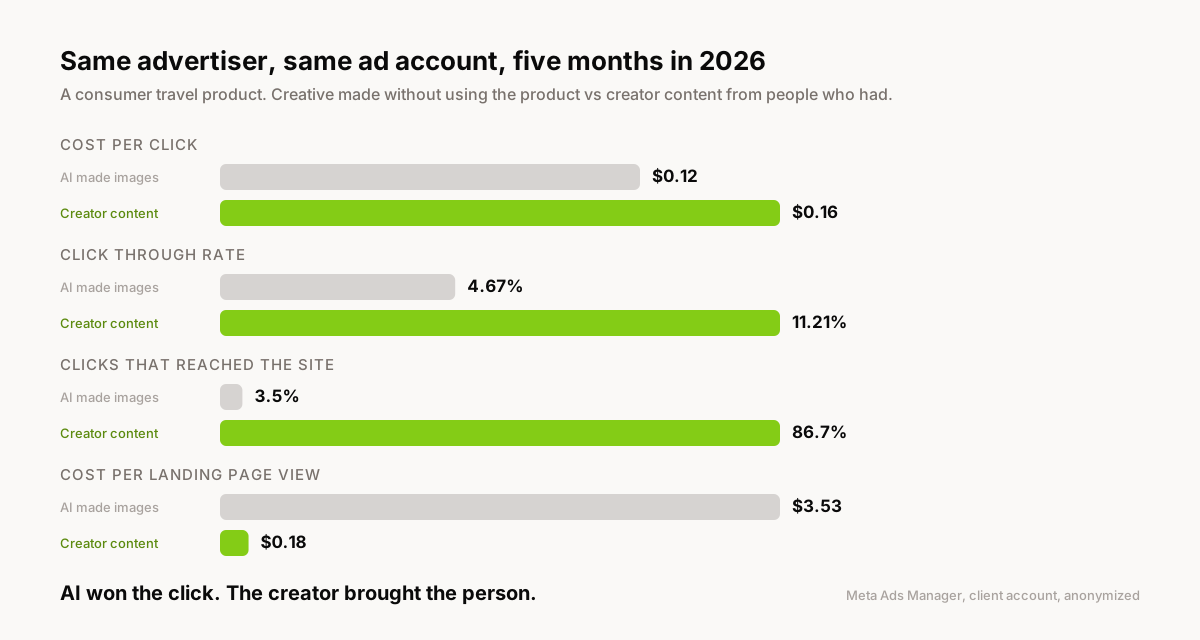
AI won the click. The creator brought the person.
I use this comparison for curation pages too, because the mechanism is the same. Content that nobody used gets curiosity. Content from someone who used it gets people who stay.
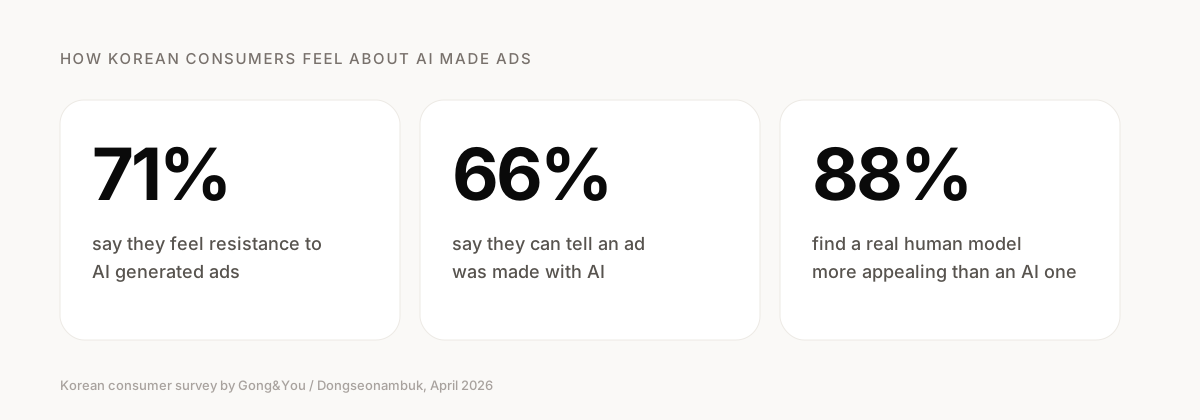
There is a second reason this holds in Korea specifically. In an April 2026 consumer survey by Gong&You and Dongseonambuk, 71% of Koreans said they feel resistance to AI generated ads, 66% said they can tell when an ad was made with AI, and 88% found a real person more appealing than an AI model. Korean audiences are not neutral about who is talking to them.
When a curation page is the right buy
I would not tell anyone to skip curation pages. There are cases where they are exactly right.
You are launching and need a lot of Koreans to have seen the name before your sales calls start. Your product's output is the content, a visual result people will want to make themselves. You are optimizing for awareness this quarter and conversion next quarter. Your budget is large enough that reach is cheap at the margin.
In those cases a page network gets you there faster than any set of creators will.
When creators are
Your product is a subscription or a paid plan, and the decision needs a demo. Someone has to watch a task get finished before they pay.
You need to know which channel produced paying users, not which one produced views. That means per creator links and a conversion event you agreed on before anyone filmed.
Your first Korea budget is a test, and you want it to answer a question rather than make a splash.
And you want the content to keep working after the post. A creator video that converted organically can run as a paid ad for months. A reposted brand asset on a curation page has nowhere to go after the feed moves on.
What to insist on with either
Per source tracking. Every page, every creator, its own link. If a vendor cannot do this, expect the report to lean on views.
Two numbers past the click. How many people reached your site, and how many reached the paid step. Ask for these before you ask for reach.
Disclosure. Since June 1, 2026, Korea's Fair Trade Commission requires that AI generated virtual endorsers be labeled as virtual, and treats a virtual endorser describing an experience that did not happen as a potentially unfair advertisement. Real creators are the simpler path here. If a page network uses AI presenters, ask how they label them.
The actual number you will be judged on. If your board asks about Korean subscribers, it helps to buy the thing that reports Korean subscribers.
Where OpenLime fits
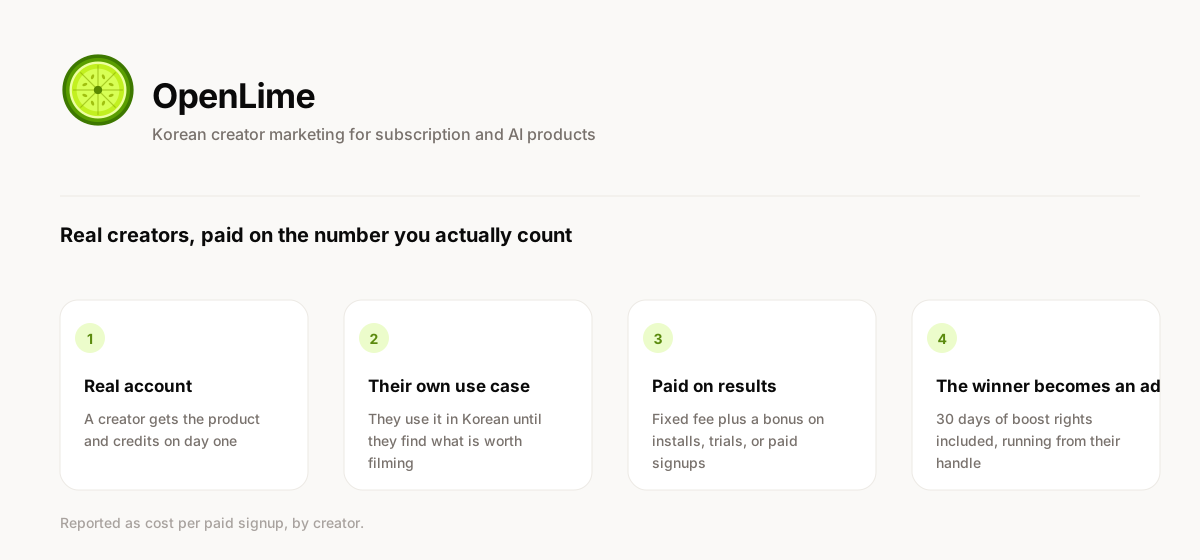
OpenLime is for the second case. Subscription and paid AI products that need a demo before someone pays, and a founder who wants to know which creator produced which signup. A creator gets a real account and credits on day one, finds their own use case, and posts to their own audience. Their fee is a fixed amount plus a bonus on the metric you pick, installs, trials, or paid signups. Every creator we contract includes 30 days of boost rights, so the video that converted can run as a Meta ad the same week, from their handle and yours. The report shows cost per paid signup by creator.
If your product makes something people want to show off, curation pages are worth running alongside. It just helps to know which one you are buying, and which number each one is going to give you.